Insights
Behavioral health clinician burnout: understand the causes and clinic fixes
Burnout in behavioral health clinics is both a workforce concern and an operational signal. The World Health Organization describes burnout through three dimensions: exhaustion, mental distance or cynicism toward one’s job, and reduced professional efficacy. Understanding behavioral health clinician burnout means looking beyond individual stress to the conditions shaping clinicians’ daily work.
Demanding clinical work can contribute to burnout, as can documentation, scheduling, and other administrative demands that compete with time for care and recovery. Readers often want clear prevalence figures, but interpreting them requires attention to how different surveys and settings define and measure burnout.
This article explains key facts and measurement considerations, then turns to practical clinic-level responses. You’ll learn how leaders can identify administrative strain, assess workload patterns, and consider operational changes that support clinicians and strengthen the organization.
Key Takeaways
- Map documentation and other nonclinical tasks to identify where administrative work is reducing time and capacity for care.
- Track workload patterns alongside clinicians’ wellbeing so operational warning signs can prompt timely adjustments.
- Interpret burnout statistics in context: definitions, survey groups, and measurement methods affect what prevalence figures show.
- Use a consistent framework to distinguish exhaustion, cynicism, and reduced professional efficacy when assessing burnout.
- Strengthen staffing stability by addressing workload design and organizational practices, not just individual coping.
Table of Contents
- 1. How can clinic owners reduce administrative burden for therapists?
- 2. Why address burnout through workforce strategy and operations?
- 3. What are the behavioral health burnout fast facts?
- 4. Burnout measurement and the Maslach Burnout Inventory
- 5. Using behavioral health burnout data for workforce planning
- Catalyst Behavioral Health Consulting
1. How can clinic owners reduce administrative burden for therapists?
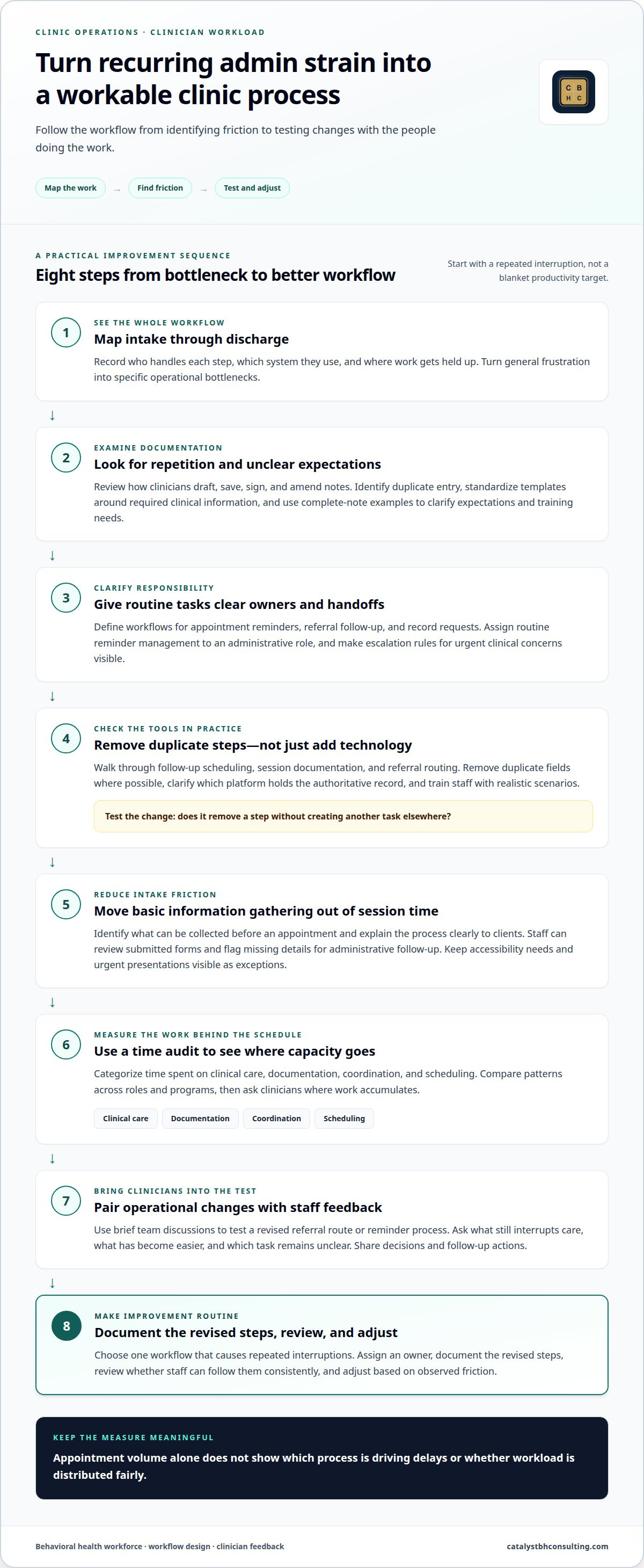
Behavioral health clinician burnout can reflect how clinic work is designed. Documentation, scheduling, and follow-up tasks can crowd out clinical time. A therapist finishing notes after sessions faces a different workload from one with protected documentation time. Clinic owners can start by mapping workflows from intake through discharge. Record who handles each step, which system they use, and where work gets held up. This turns general frustration into specific operational bottlenecks.
Documentation is a frequent pressure point because it follows every clinical encounter. Review how clinicians draft, save, sign, and amend notes in the electronic health record. For example, entering the same information in multiple forms creates avoidable repetition. Standardize templates around required clinical information while preserving room for individualized care. Examples of complete notes can clarify expectations and help supervisors identify training needs instead of treating every delay as a motivation problem.
Administrative tasks need clear owners and handoffs. A clinic can define workflows for appointment reminders, referral follow-up, and record requests. For example, assign reminder management to an administrative role rather than expecting each therapist to track messages between sessions. Make escalation rules for urgent clinical concerns visible. This keeps routine coordination from interrupting care and helps staff understand which tasks belong to their roles.
Technology can streamline repetitive work, but poorly designed systems add clicks and duplicate effort. Review the steps clinicians take to schedule follow-ups, document sessions, and route referrals. Remove duplicate fields where possible, clarify which platform holds the authoritative record, and train staff with realistic scenarios. A new tool alone won’t solve a workflow problem. The test is whether it removes a step without creating another task elsewhere.
Intake is another practical opportunity to reduce friction. Identify what information can be collected before an appointment, then explain the process clearly to clients. Staff can review submitted forms before the session and flag missing details for administrative follow-up. This keeps appointment time focused on clinical needs rather than basic data gathering. Make exceptions visible, too, so accessibility needs or urgent presentations aren’t overlooked in a standard process.
Track work, not just appointment volume. A time audit can categorize documentation, coordination, scheduling, and clinical care. Compare patterns across roles and programs, then ask clinicians where work accumulates. If notes routinely remain unfinished after sessions, examine scheduling buffers, template usability, and supervisory expectations together. A single productivity target won’t show which process is driving delays or whether the workload is distributed fairly.
Pair operational changes with staff feedback. Use brief team discussions to test whether a revised referral route or reminder process works in practice. Ask what still interrupts care, what has become easier, and which task remains unclear. Emotional strain deserves attention, but it shouldn’t obscure fixable administrative causes. Share decisions and follow-up actions so clinicians can see how their feedback shapes clinic operations.
Start with one workflow that causes repeated interruptions, such as late documentation or referral tracking. Assign an owner, document the revised steps, and review whether staff can follow them consistently. Then adjust the process based on observed friction. This cycle makes administrative improvements part of routine clinic management, rather than a temporary technology project or another responsibility left to therapists.
2. Why address burnout through workforce strategy and operations?
Treat burnout as a workforce and wellbeing concern, not as something that fits only one category. Cochrane describes it as involving distress, reduced effectiveness, decreased motivation, and dysfunctional attitudes and behaviours at work. These signs can appear alongside strained handoffs or less participation in team decisions. Leaders should consider clinician wellbeing, workplace culture, and the conditions surrounding the work.
Common signs can include persistent exhaustion, reduced motivation, detachment, and feeling less effective. A supervisor might notice a clinician withdrawing from case discussions or struggling with routine decisions. These observations don’t establish a diagnosis. They do provide a reason to check in privately, ask what has changed, and consider whether workload, support, compensation and benefits, or personal wellbeing needs attention.
Operational indicators add context. Compare a clinician’s schedule, workload, and completed responsibilities over time. If productivity changes after a new team assignment or workflow, discuss those conditions before treating the change as an individual performance issue. Look for patterns across teams, too. Similar concerns among several staff members may point to shared work conditions leaders can address through workforce planning and operational changes.
Clinicians should seek professional support when distress or exhaustion persists, affects daily functioning, or makes work increasingly difficult to manage. A qualified health professional can assess the individual situation and discuss appropriate support. Managers can encourage this step while reviewing workplace factors and keeping personal health discussions separate from routine performance management.
Federal and state workforce initiatives can support behavioral health training, workforce development, and organizational capacity. Available programs depend on the initiative and its eligibility criteria. Clinic leaders can consider how workforce development resources align with staff training needs, retention priorities, and the organization’s services.
Respond to warning signs with a defined process. Arrange a confidential conversation, identify immediate workplace pressures, and agree on a practical next step. For example, clarify task priorities or adjust team communication when responsibilities overlap. Set a follow-up point and ask whether the change helped. This connects individual support with operational action without assuming either explains every case.
Leaders can strengthen this approach by reviewing themes across staff feedback and management observations. Cochrane’s description underscores that burnout can affect motivation and effectiveness, not only emotional wellbeing. A workforce strategy informed by these patterns should consider the person, workplace culture, and systems shaping daily responsibilities. This broader view can guide a more relevant response than treating every concern as solely personal or operational.
A structured discussion of workforce and operational priorities can help leaders translate warning signs into clinic-level action.
3. What are the behavioral health burnout fast facts?
Staffing stability is one part of a broader workforce strategy. Leaders need to understand why clinicians stay, why they leave, and which workplace conditions affect those decisions. Exit feedback can reveal recurring concerns, while stay conversations can surface issues before a departure becomes likely. Compare themes across roles and programs, then use the findings to assess workload design, management practices, workplace culture, and the organization’s total rewards approach.
Compensation and benefits are part of that assessment. Review whether pay structures reflect role expectations, responsibilities, and internal consistency. Consider whether benefits are accessible and usable, including support for leave, health needs, and professional development. These factors don’t replace sound workload design or supportive supervision. They are additional areas to examine when clinicians report dissatisfaction or difficulty sustaining their work.
Make the review concrete and consistent. Compare the responsibilities of clinicians with similar titles, then document how differences in scope inform compensation decisions. Ask staff which benefits help them remain well and engaged, and what barriers make those benefits difficult to use. Clear explanations of available support can reduce confusion, while consistent decisions can strengthen trust in leadership. Reviewing feedback alongside retention patterns helps distinguish individual concerns from broader organizational issues.
Temporary and part-time staffing can help clinics respond to vacancies, leave, and changing service needs. Define responsibilities before a temporary provider starts, including supervision, access to treatment plans, and handoff procedures. For example, a part-time clinician needs a reliable way to coordinate care when another team member is unavailable. Without clear ownership, extra staffing can create communication gaps or shift coordination work to permanent staff, affecting both operations and team wellbeing.
Staffing plans should account for continuity of care. Map which roles maintain client relationships, coordinate referrals, and complete follow-up when a clinician leaves. Establish handoff procedures that preserve relevant treatment context while respecting organizational privacy practices. Leaders can then identify where coverage arrangements need clearer ownership. This planning supports staff and clients without assuming temporary coverage replaces addressing why people leave.
Use workforce information to guide decisions, not reduce people to retention metrics. Review vacancies, departures, staff feedback, and compensation practices together, and compare patterns across roles and programs. If clinicians identify limited growth opportunities, clarify development paths and the qualifications or responsibilities associated with each role. If concerns focus on workload or stress, examine how assignments are distributed and what support is available. Treating these factors as connected parts of workforce strategy gives leaders a stronger basis for improving stability and supporting behavioral health teams.
4. Burnout measurement and the Maslach Burnout Inventory
The World Health Organization describes burnout through three dimensions: exhaustion, mental distance or cynicism toward one’s job, and reduced professional efficacy. These dimensions offer leaders a structured way to examine workforce health and its potential impact on service delivery, not a single explanation for every clinician’s experience. The Maslach Burnout Inventory can support a consistent assessment process. Its results should be considered alongside workload, staff feedback, operational conditions, and available support, rather than treated as a complete account of workplace wellness.
Start by defining the business question behind measurement. A clinic might want to understand whether clinicians report exhaustion, detachment, or reduced efficacy and how these concerns may affect workforce stability and care operations. Different concerns may call for different responses. For example, a team reporting exhaustion may need a workload review, while reports of cynicism could prompt closer attention to supervision and team culture. A measure helps organize inquiry; it doesn’t replace careful interpretation or professional support.
Use consistent administration and protect confidentiality. Before collecting responses, explain who will see the results, how leaders will use them, and how individual privacy will be handled. Review findings in aggregate where possible, then discuss them with staff. If clinicians fear their answers will affect performance reviews or workplace support, responses may not reflect their candid experience. Clear governance makes the process more useful for workforce planning and leadership decisions.
Interpret results alongside other indicators, not in isolation. Compare reported burnout dimensions with session patterns, vacancies, workload changes, and staff satisfaction. A clinic might see rising exhaustion alongside consistently full schedules, or reduced efficacy alongside frequent workflow interruptions. These patterns raise questions for leadership; they don’t prove a single cause. Billing pressure, documentation demands, care coordination, and access to resources may affect teams differently, so examine the context behind each signal.
Measurement should lead to a defined response. After reviewing findings, identify one workplace factor to address, assign an owner, and set a review point. For instance, if staff cite workload, leaders can assess caseload distribution and scheduling practices. If clinicians describe weak support, managers can review access to supervision, benefits, and communication routines. Repeating the assessment later can help determine whether staff perceptions changed after those actions.
Avoid using a score to rank clinicians or programs. A clinician’s responses reflect reported experience, while operational data describes work patterns; neither should stand alone as a performance judgment. Instead, combine the Maslach Burnout Inventory with confidential feedback and practical indicators. This can help leaders distinguish individual support needs from broader workforce issues, then focus on changes to workload, culture, compensation and benefits, or clinic processes.
Measurement needs clear boundaries. A burnout instrument does not establish a mental health diagnosis or replace clinical assessment. If a clinician reports persistent distress, leaders should encourage appropriate professional support while reviewing workplace contributors. A balanced process protects staff, supports therapy teams, and gives management a clearer basis for evaluating organizational wellness, workforce capacity, and satisfaction over time.
5. Using behavioral health burnout data for workforce planning
Burnout estimates can inform workforce strategy, but their meaning depends on who answered, when surveys ran, and which dimensions they measured. A National Council survey found 93% of behavioral health workers had experienced burnout; 62% reported moderate or severe burnout. These results describe survey respondents, not every clinician. Distinguishing experience from moderate or severe burnout helps leaders interpret workforce data and avoid treating one measure as a complete picture of organizational risk.
A focused example comes from Westchester Jewish Community Services. One year after the start of the pandemic, 70.6% of responding clinicians reported high burnout in at least one of three dimensions. The survey included 61 respondents, with a response rate of about 70%. For workforce planning, these details matter: the findings offer insight into that organization’s respondents, rather than a universal prevalence estimate.
Which behavioral health roles and settings have the highest burnout rates? The available evidence does not establish one highest behavioral health setting. The 2024 Medscape Physician Burnout Report ranked psychiatrists among the five specialties with the highest burnout, with nearly half reporting symptoms. This finding concerns psychiatrists, not all behavioral health roles, and should be used cautiously when leaders assess staffing needs across different settings.
How does burnout compare with other healthcare professionals? The U.S. Surgeon General’s Advisory on Addressing Health Worker Burnout reports that up to 54% of nurses and physicians in the United States report symptoms. This offers broader workforce context, but the populations and measures differ from behavioral health surveys. The percentages therefore aren’t direct comparisons and should not be used as equivalent benchmarks.
Westchester Jewish Community Services’ results also show why workforce analytics should track dimensions separately. In its survey, 45% of clinicians reported emotional exhaustion, and 59% reported reduced personal accomplishment. High depersonalization or cynicism was reported by 11.5% of respondents. A single overall rate can obscure these differences, limiting leaders’ ability to identify which organizational challenges need attention.
Other named findings offer context for leadership and workplace culture without representing all behavioral health workers. The American Psychological Association reported that more than 4 in 10 psychologists feel unable to meet demand for their services. In the 2023 APA Practitioner Pulse Survey, psychologists’ burnout levels decreased year over year as time for self-care and peer support increased. These findings describe different groups and measures, not one combined prevalence rate, but highlight demand and support as relevant planning considerations.
For organizations, the practical takeaway is to interpret national findings alongside local staff feedback and workforce indicators. Keep survey populations and dimensions clear when sharing results with leaders, and consider them alongside operational priorities and compensation and benefits decisions. This discipline supports better decisions about where to focus organizational effort, without treating one survey as a complete picture. A conversation about workforce assessment and organizational priorities can help connect those findings to practical planning.
Catalyst Behavioral Health Consulting
Burnout can point to wider staffing and organizational challenges for behavioral health organizations. Reviewing workforce practices alongside operational, clinical, and regulatory priorities can help clarify where attention is needed. Fractional HR leadership and a Business Health Assessment are available to support that review. Organizations can also consider how licensing, accreditation, curricula, and training systems fit their priorities.
To discuss workforce concerns and organizational priorities, contact Catalyst Behavioral Health Consulting.
Build a sustainable operating rhythm
Lasting improvement means treating workforce wellbeing as part of HR strategy and organizational design, not as a separate initiative. Establish clear ownership: decide who reviews workforce signals, including staff feedback and available workforce data; how concerns reach leadership; and how agreed changes are revisited. Consider whether staffing practices, compensation and benefits, and team culture support behavioral health and retention. This gives burnout prevention a place in everyday management rather than making it a short-term response to a difficult period.
Keep the process practical. Select a priority, assign responsibility, and make follow-through visible to those affected. Set a regular point to review whether the change is working and whether staff experience has shifted. Use workforce feedback and operational measures to inform decisions, then adapt practices as services and team needs evolve. This creates a deliberate foundation for retention and reliable care without assuming one intervention fits every team.
If your organization is ready to turn workforce concerns into a focused plan, start a conversation with Catalyst Behavioral Health Consulting. A thoughtful next step can help your team move from awareness to coordinated action.
Frequently Asked Questions
What do behavioral health burnout survey findings tell employers?
The National Council survey found that 93% of behavioral health workers had experienced burnout, and 62% reported moderate or severe burnout. These figures describe survey respondents, not every worker or organization. For workforce planning, pair prevalence findings with local indicators, such as vacancy patterns, staff feedback, and changes in available appointments. That combination helps leaders assess whether national findings align with conditions in their own practice.
How can clinic owners align compensation and benefits with workforce needs?
Start by learning which aspects of compensation and benefits staff consider important to their ability to remain in their roles. Gather feedback across job groups, then review it alongside retention patterns and staffing needs. Share how the information will inform decisions, and communicate the rationale for changes or for maintaining current offerings. A transparent process can help leaders connect workforce priorities with broader organizational goals.
How can HR strategy help address persistent staffing challenges?
Organizations can connect staff feedback to decisions about workload, supervision, and job design. Choose a specific workplace concern, assign a leader to address it, and communicate what will change. For example, if clinicians report competing priorities, managers can clarify which tasks take precedence and how urgent work is escalated. Revisit the decision with affected staff to keep the response connected to daily practice.
How do you build a supportive culture in a behavioral health practice?
Build support into regular management routines rather than relying on occasional appreciation events. Managers can invite candid feedback during supervision, explain how concerns will be handled, and close the loop after decisions. For example, when a team raises a recurring coverage issue, leadership can share the next step and its rationale. Consistent communication, fair expectations, and respectful handling of concerns help make psychological safety part of everyday work.
How can workforce analytics help leaders assess burnout risk?
There isn’t a single amount of administrative work to offload for every clinician or clinic. Establish a baseline by tracking administrative time alongside staff-reported exhaustion, workload, and available clinical capacity. After changing a workflow, compare those measures again and ask clinicians whether the change reduced friction. Focus on the work creating the greatest pressure in that role, not an arbitrary number of minutes removed.
Why should leaders address workplace conditions as well as behavioral health?
Visible distress is often easier to recognize than a gradual buildup of operational strain. A clinician may report exhaustion while the contributing pattern involves scheduling, unclear priorities, or inadequate coverage. Individual support can address personal wellbeing, but it won’t redesign clinic workflows on its own. Leaders can respond more fully by considering both the person’s needs and the workplace conditions shaping the experience.
How can organizations use retention insights to guide workforce planning?
Retention efforts work best when they surface concerns before a provider decides to leave. Use structured stay interviews annually, retention check-ins with new hires at 90 and 180 days, and career-path discussions annually, separate from performance reviews. Ask about workload, supervision, growth, and what would make the role more sustainable. Record recurring themes and connect them to decisions about staffing, development, and workplace practices.
How can leaders assess the organizational impact of burnout?
Burnout can affect a clinic beyond an individual employee’s wellbeing. Reduced effectiveness or motivation may make it harder to sustain care capacity, while departures can create vacancies and increase pressure on remaining staff. For example, a team covering open caseloads may have less flexibility for coordination and follow-up. Tracking staffing changes alongside appointment availability can help leaders identify operational strain early and respond before disruptions compound.

Article by
James McCreary, MS, LPC-S
The Catalyst dispatch.
Frameworks and field lessons on running effective behavioral-health programs. One email a month, sometimes two. Never spam.